



Medically reviewed by Michael Webster, FNP-BC
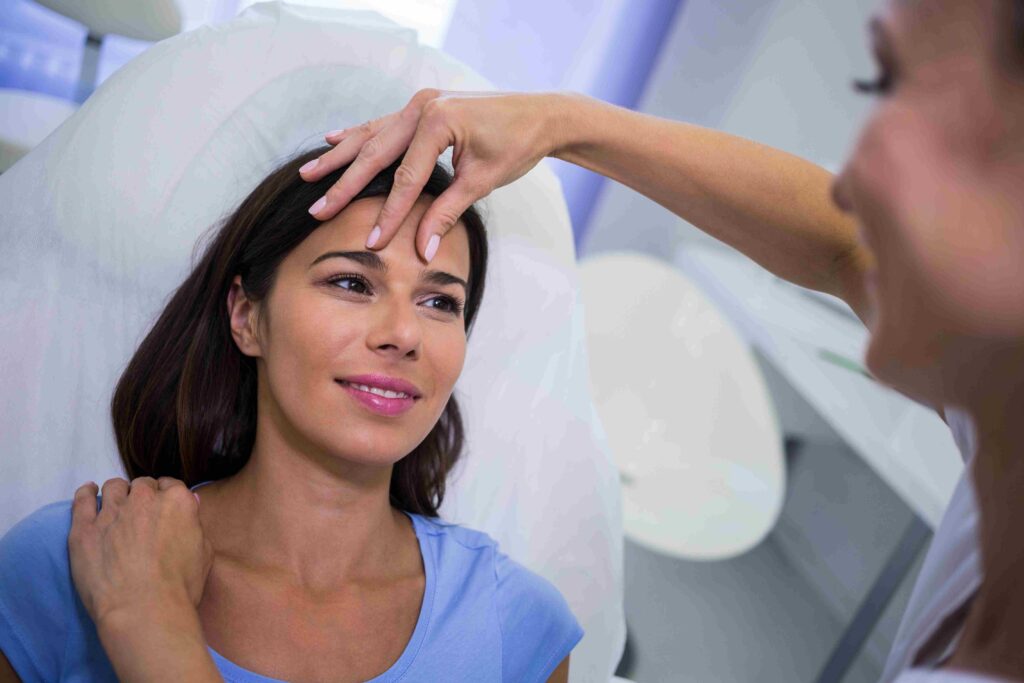
A droopy eyelid (ptosis) and hooded eyes are two different problems. With ptosis, the edge of the upper eyelid sits too low because the muscle that lifts it has stretched or weakened. With hooded eyes, the eyelid usually sits where it should, but loose skin folds down over it (doctors call this dermatochalasis). Some people have both. The cause decides the treatment: Upneeq, a prescription eye drop, can lift a lid that droops from acquired ptosis, but it does not remove extra skin.
| Droopy eyelid (ptosis) | Hooded eyes (dermatochalasis) | |
|---|---|---|
| What’s happening | The muscle that lifts the lid has stretched or pulled away from it | Loose, extra skin folds down over the lid |
| What you see | The lid edge sits low and may cover part of the pupil | A fold of skin hides the eyelid crease; the lid edge may sit at a normal height |
| Common causes | Aging, eye injury, some eye surgeries; rarely a nerve or muscle disease | Aging skin, family traits; smoking and higher body weight are also linked |
| Can it block vision? | Yes, mostly your upper vision | Yes, often your side vision |
| What can help | Upneeq (for acquired ptosis in adults) or ptosis surgery | Upper eyelid surgery (blepharoplasty); a brow lift if the brow sits low |
| Does Upneeq help? | It can, once a provider confirms acquired ptosis | It does not remove skin |
What is a droopy eyelid (ptosis)?
Ptosis means the upper eyelid itself hangs lower than it should. It can droop a little, or far enough to cover part of the pupil and block your upper field of vision.
In adults, the usual type is acquired (also called involutional) ptosis. It happens when the levator, the main muscle that raises the eyelid, stretches or separates from the lid. Aging is the most common reason. Eye injuries and some eye surgeries can also cause it. Rarely, a nerve, muscle or orbital disease is behind it, which is why a new droop should always be checked.
Signs that point to ptosis:
What are hooded eyes?
Hooded eyes usually describe loose, extra skin on the upper eyelid that folds down over the eyelid crease. The medical name is dermatochalasis. The lifting muscle can be working normally; the skin above it has become heavier and looser.
Hooding is one of the most common signs of an aging face. Skin loses elasticity over time, gravity pulls it down, and the fat behind the eyelid can push forward and add puffiness. Family history is the strongest risk factor. Smoking, higher body weight, male sex and lighter skin are also linked to it.
For many people hooding is mainly a cosmetic concern. Heavy folds can still block side vision, make the eyes feel tired or heavy, or irritate the skin inside the fold.
Sometimes it’s the brow. A low eyebrow pushes skin down onto the upper eyelid and can look just like hooding. A provider checks brow position too, because a low brow is treated differently.
Can you have a droopy eyelid and hooded eyes at the same time?
Yes, and it’s common with age. Loose eyelid skin often shows up together with ptosis. The extra skin can hide how low the lid really sits, so it’s easy to blame everything on one cause.
How can you tell which one you have?
A quick mirror check can give you a clue. It can’t replace an exam, but it helps you describe what you see.

- Stand in good light, relax your forehead and look straight ahead into a mirror.
- Find the edge of your upper eyelid, where the lashes grow. In most people it rests a little below the top of the iris.
- If the lid edge covers part of the pupil, or one side sits clearly lower, ptosis is more likely.
- Gently lift the skin just under your eyebrow with a fingertip, without pulling on the lid itself. If the lid edge now sits at a normal height, the droop is mostly extra skin. If it still sits low, the lifting muscle is involved.
- Look at your eyebrows. If they sit low and lifting them opens up the eye area, a low brow may be adding to the hooding.
The online intake for Upneeq asks for a face photo, so a clear, straight-on picture with your eyes open and relaxed helps the provider review your eyelids.
Why does the cause matter for treatment?
If it’s ptosis: Upneeq or surgery
Upneeq (oxymetazoline hydrochloride ophthalmic solution, 0.1%) is a prescription eye drop approved by the FDA to treat acquired blepharoptosis in adults. It acts on Müller’s muscle, a small muscle in the upper eyelid that helps hold the lid up, so the eye opens a little wider.
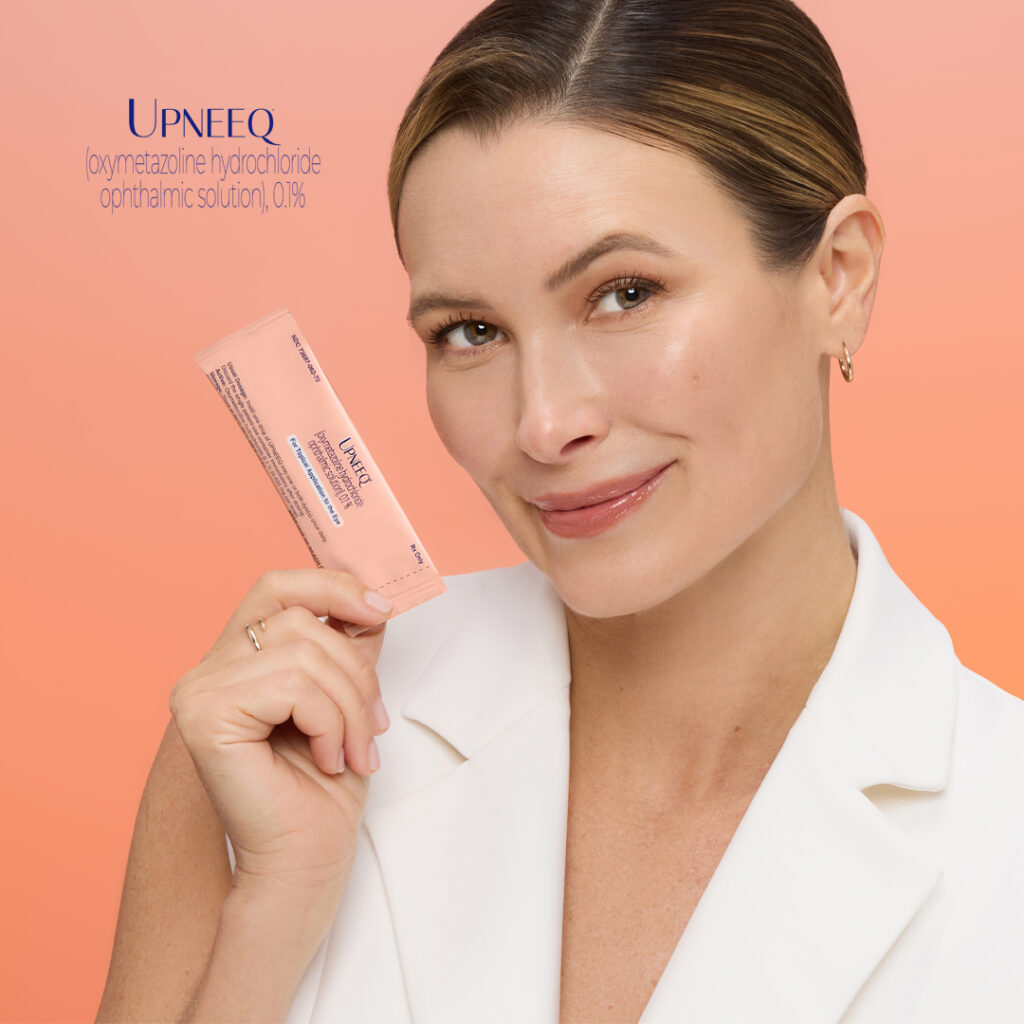
You use one drop in each affected eye once a day. In clinical trials, the lift was greatest about 2 hours after a dose and was still measurable at 8 hours. It keeps working only while you keep using it. It also doesn’t help every kind of droop: ptosis caused by an injury or a nerve problem usually doesn’t respond. Ptosis surgery, which tightens or reattaches the lifting muscle, is the long-term option.
If it’s hooded skin: surgery removes the extra skin
No eye drop can remove skin. Upper eyelid surgery (blepharoplasty) takes away loose skin, and sometimes some fat, through a cut hidden in the eyelid crease. If a low brow is part of the problem, a brow lift may be done at the same time. These are surgical procedures performed by an oculoplastic or plastic surgeon.
If you have both
Upneeq can still lift the lid itself, but the extra skin stays. Some people are happy with the extra opening; others need surgery to get the result they want. A provider can tell you which part of the droop each option addresses. For recovery times, results and cost side by side, see our Upneeq vs. eyelid surgery comparison.
When does a droopy eyelid need medical care first?
Most acquired ptosis comes on slowly over years. A droop can also be the first sign of a nerve or brain problem, such as a stroke, an aneurysm, Horner syndrome or myasthenia gravis.
Get urgent medical care if your eyelid droops suddenly, or if the droop comes with double vision, a severe headache, a change in pupil size, eye pain or swelling, or weakness in your face or body. Don’t wait for an online visit.
Is Upneeq safe for you?
Upneeq isn’t right for everyone. Tell the provider if you have:
In clinical trials, 1% to 5% of people had side effects such as eye redness, dry eye, blurred vision, eye irritation, pain when putting in the drop, tiny spots of irritation on the eye’s surface (punctate keratitis) and headache. If you wear contact lenses, take them out first and wait 15 minutes before putting them back in. Leave 15 minutes between Upneeq and any other eye drop. Full safety information is on our Upneeq page.
How do you get Upneeq online with Restored Wellness?
1
2
3
| Option | Vials | Price |
|---|---|---|
| 30-day supply | 30 single-use vials | $150 ($5.00 per vial) |
| 90-day supply | 90 single-use vials | $350 ($3.88 per vial) |
| 90-day subscription | 90 single-use vials, renews every 3 months, cancel anytime | $300 ($3.33 per vial) |
Insurance does not cover Upneeq. Local information: Upneeq in New Jersey, California, Oklahoma City, Phoenix, Houston and New York City.
Frequently asked questions
Are hooded eyes the same as droopy eyelids?
No. Hooded eyes are loose skin folding over the eyelid. A droopy eyelid (ptosis) means the lid itself sits too low because its lifting muscle has stretched or weakened. You can have one or both.
Can Upneeq fix hooded eyes?
Upneeq does not remove extra skin. It lifts an eyelid that droops from acquired ptosis. If hooding comes only from loose skin, eyelid surgery is the usual treatment. If you have both, Upneeq may still lift the lid itself.
How fast does Upneeq work, and how long does it last?
In clinical trials, the lift was greatest about 2 hours after the drop and was still measurable 8 hours later. You use it once a day, and the effect stops when you stop using it.
Does insurance cover treatment for droopy or hooded eyelids?
Insurance does not cover Upneeq. Eyelid surgery done because the eyelids block your vision is sometimes covered when testing shows vision loss, so check with your insurer.
Do I need an in-person exam to get Upneeq?
With Restored Wellness, you complete an online intake with a face photo, and a licensed provider decides whether Upneeq is right for you. If the droop came on suddenly or you have other symptoms, see a doctor in person first.
Find out if Upneeq is right for your eyelids
Complete a short online intake. A licensed provider reviews it and, if Upneeq is appropriate, the pharmacy ships it to your door.
Questions? Call 305-394-9790
Sources
- American Academy of Ophthalmology: What Is Ptosis?
- EyeWiki (American Academy of Ophthalmology): Dermatochalasis
- UPNEEQ prescribing information (DailyMed, revised 7/2026)
- American Society of Plastic Surgeons: Eyelid Surgery
This article is for general information and is not medical advice. Upneeq is available only by prescription after a review by a licensed provider.